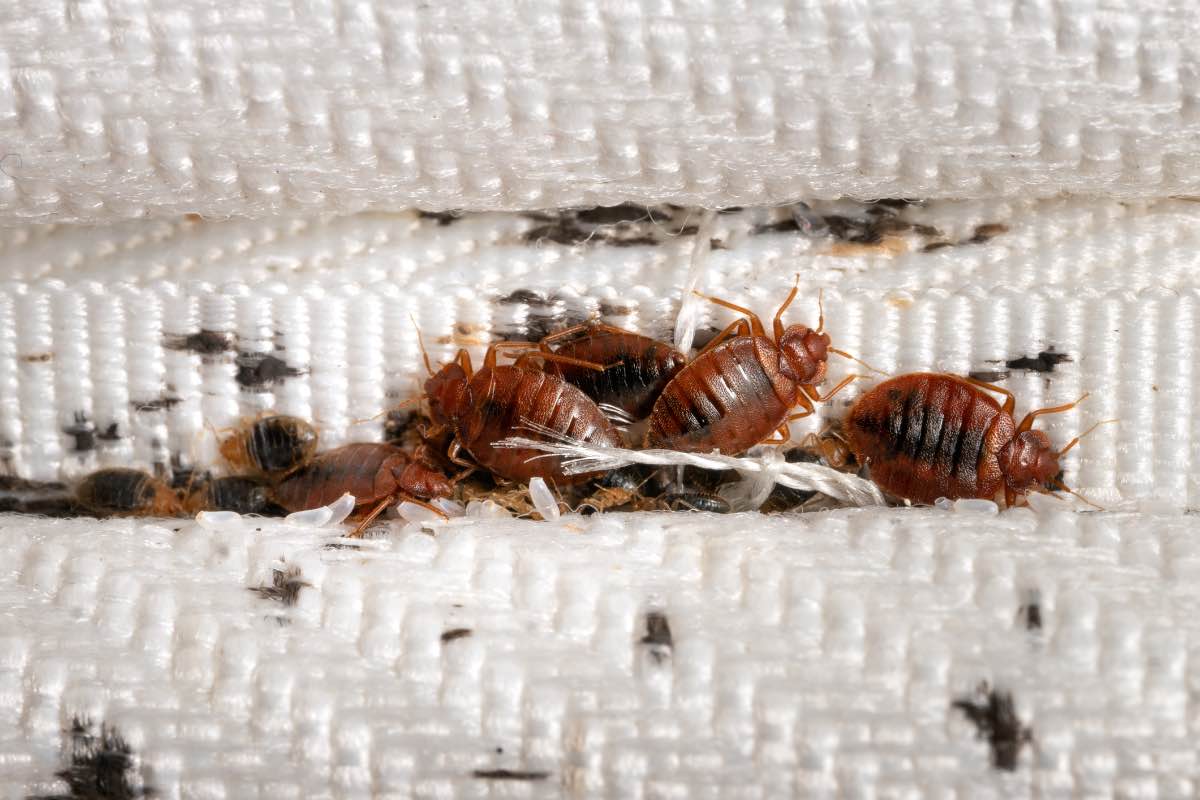
Bed bug treatments should be applied first to sleeping areas including mattresses, box springs, bed frames, and surrounding floor cracks where bugs harbor and feed. Prioritizing these high-risk zones followed by furniture, baseboards, and clutter eliminates the primary infestation source before bugs spread.
Mattress and Box Spring Priority
Strip bedding into sealed bags for hot washing/drying; vacuum both sides thoroughly. Apply liquid insecticides or dusts to mattress seams, tufts, piping, and box spring undersides—bed bugs spend 95% of time here feeding/hiding.
Bed Frame and Headboard Treatment
Disassemble frame legs; treat joints, screw holes, and slats with residual sprays. Vacuum headboards and footboards; apply contact insecticides to crevices where bugs crawl to/from sleeping surfaces.
Surrounding Floor and Wall Cracks
Place interceptor traps under bed legs first; treat 3-foot perimeter around bed including carpet edges, baseboards, and wall-floor junctions. Vacuum daily before reapplication prevents escape/reinvasion.
Furniture and Upholstery Next
After bed zones, treat couches, chairs, and nightstands—lift cushions, vacuum crevices, apply targeted sprays. Empty drawers; treat interiors before refilling to avoid cross-contamination.
Conclusion
Bed bug treatments work most effectively starting with mattress/box spring/bed frame harborages, then perimeter traps, followed by furniture. Systematic application from infestation epicenter outward combined with preparation maximizes elimination.
FAQs
Primary treatment starting point?
Mattress seams, tufts, and box spring undersides—bed bugs aggregate here 95% of time.
Bed leg protection method?
Interceptor traps with talcum powder under all four legs prevent bed access/escape.
Vacuuming sequence before sprays?
Mattress → box spring → frame → floor perimeter—dispose bag immediately outside.
Liquid insecticide drying time?
2-4 hours minimum; avoid bed use until fully dry per label directions.
Headboard crevice treatment?
Residual sprays into screw holes and fabric folds after vacuuming thoroughly.
Upholstered furniture timing?
After sleeping area completion; lift cushions, treat undersides and seams.
Wall crack application order?
3-foot perimeter around bed first, then room baseboards to contain spread.
Preparation bag sealing essential?
Yes—launder/dry all bedding at 120°F+; seal non-washables in black bags for heat.
Re-treatment frequency?
Weekly for 4-6 weeks monitoring traps; residuals last 30-90 days typically.
Professional heat treatment prep?
Same order: declutter bed zone first, then interceptors before whole-room heating.